A personal loan is one of the fastest ways to meet financial needs such as medical emergencies, home renovation, education expenses, weddings, or debt consolidation. However, before applying for a loan, it is important to compare personal loan interest rates offered by different banks. Even a small difference in interest rates can save thousands of rupees over the loan tenure.
In this guide, you’ll learn how personal loan interest rates work, what factors affect them, and how to get the best deal.
What is a Personal Loan?
A personal loan is an unsecured loan provided by banks and financial institutions. Since no collateral is required, approval depends mainly on your income, employment status, repayment history, and credit score.
Loan amounts generally range from ₹50,000 to ₹40 lakh, with repayment periods ranging from 1 to 7 years.
Why Do Interest Rates Matter?
The interest rate directly affects your monthly EMI and the total amount you repay.
For example:
- Loan Amount: ₹5,00,000
- Tenure: 5 Years
A lower interest rate can significantly reduce the total interest paid during the loan period.
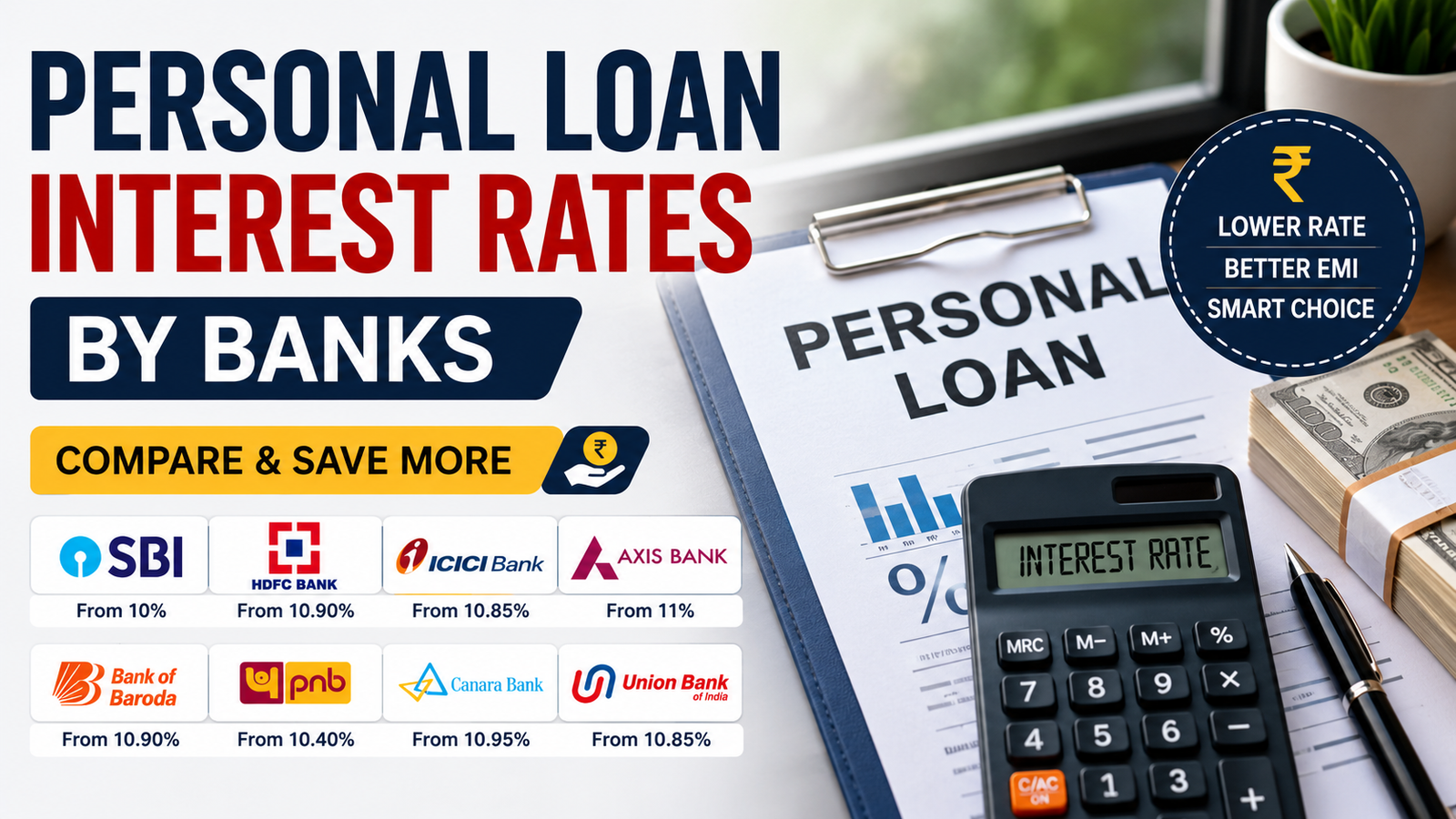
Personal Loan Interest Rates by Major Banks (Indicative)
| Bank | Starting Interest Rate (Approx.) |
|---|---|
| SBI | From 10% p.a. |
| HDFC Bank | From 10.90% p.a. |
| ICICI Bank | From 10.85% p.a. |
| Axis Bank | From 11% p.a. |
| Bank of Baroda | From 10.90% p.a. |
| Punjab National Bank | From 10.40% p.a. |
| Canara Bank | From 10.95% p.a. |
| Union Bank of India | From 10.85% p.a. |
Note: Interest rates are indicative and may change depending on the bank’s policies and your eligibility.
Factors That Affect Personal Loan Interest Rates
1. Credit Score
A credit score above 750 generally improves your chances of getting lower interest rates.
2. Monthly Income
Applicants with stable and higher income are often offered better loan terms.
3. Employment Type
Government employees and salaried professionals usually receive more competitive interest rates than applicants with irregular income.
4. Existing Loan Obligations
Banks evaluate your debt-to-income ratio before approving a loan.
5. Loan Amount and Tenure
Longer repayment periods may reduce monthly EMI but increase total interest paid.
Tips to Get a Lower Interest Rate
- Maintain a credit score above 750.
- Pay credit card bills and EMIs on time.
- Compare loan offers from multiple banks.
- Borrow only the amount you actually need.
- Choose the shortest affordable repayment tenure.
- Avoid multiple loan applications within a short period.
Documents Required
Most banks ask for:
- Aadhaar Card
- PAN Card
- Address Proof
- Passport-size Photograph
- Salary Slips (last 3 months)
- Bank Statements (last 6 months)
- Income Tax Returns (for self-employed applicants)
Eligibility Criteria
Generally, applicants should:
- Be between 21 and 60 years of age.
- Have a regular source of income.
- Meet the bank’s minimum monthly income requirement.
- Have a satisfactory repayment history.
Should You Apply Online?
Yes. Online personal loan applications are convenient because they offer:
- Faster approval process
- Paperless documentation
- Easy EMI calculation
- Instant eligibility checks
- Quick fund disbursal (subject to approval)
Common Mistakes to Avoid
Many borrowers make these mistakes:
- Applying without checking eligibility.
- Ignoring processing charges and other fees.
- Choosing the longest tenure without comparing total repayment.
- Borrowing more than required.
- Missing EMI payments.
Conclusion
Personal loans can be an excellent financial solution when used responsibly. Before applying, compare interest rates, processing fees, repayment options, and eligibility criteria across different banks. Selecting the right lender can help you reduce your borrowing cost and manage repayments comfortably.
Always read the loan terms carefully and borrow only what you can comfortably repay.
Frequently Asked Questions (FAQs)
1. Which bank offers the lowest personal loan interest rate?
Interest rates vary based on eligibility, credit score, income, and bank policies. Compare offers before applying.
2. What credit score is ideal for a personal loan?
A score of 750 or above is generally considered favorable.
3. Can I repay my personal loan early?
Many banks allow prepayment, though some may charge a prepayment fee.
4. Is a personal loan secured?
No. Personal loans are usually unsecured, meaning you generally do not need to pledge collateral.
5. Can self-employed individuals apply?
Yes. Most banks provide personal loans to eligible self-employed professionals and business owners who meet their income and documentation requirements.